St. Louis to solicit demolition bids for Railway Exchange garage, former Charlie Gitto’s site nearby
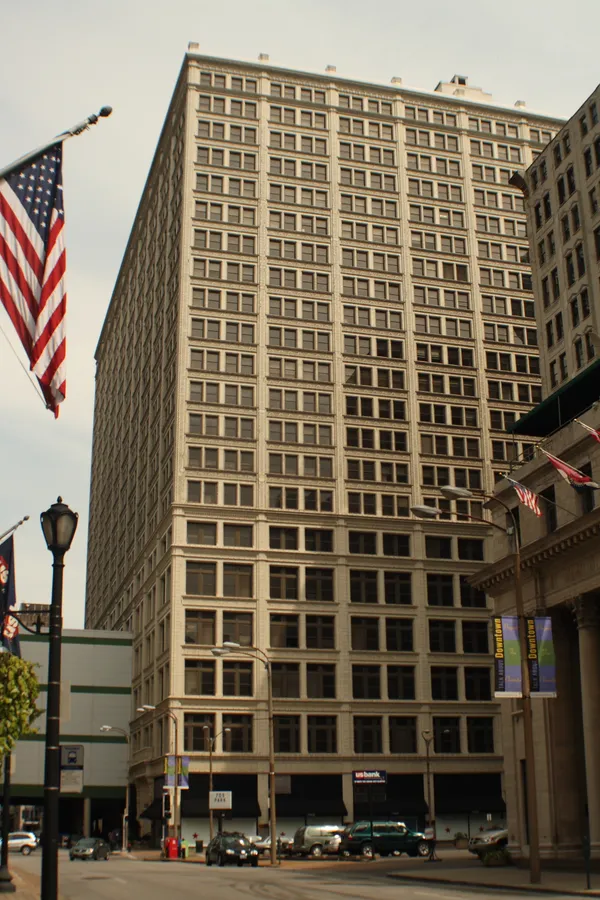
Downtown site control expands as city prepares next steps around long-vacant Railway Exchange complex
St. Louis officials are preparing to solicit bids to demolish the parking garage immediately south of the Railway Exchange Building, a deteriorated structure tied to a broader effort to stabilize and redevelop one of downtown’s largest vacant properties. The garage sits within a cluster of parcels that also includes the former downtown Charlie Gitto’s restaurant space nearby and other adjacent buildings within the same redevelopment area.
The demolition initiative follows the city’s recent moves to assemble property around the Railway Exchange Building through the St. Louis Development Corporation and the Land Clearance for Redevelopment Authority, using tools that have included eminent-domain proceedings to clear title and consolidate control. In court filings and redevelopment actions over the past two years, city agencies have described the goal as removing blight, securing the vacant structures, and preparing the site for a future developer-led rehabilitation plan.
City development materials have characterized the garage as a public-safety concern requiring emergency demolition planning. The project is expected to proceed through a competitive procurement process, with contractors asked to price the removal work and associated site controls. While the garage is physically tied to the broader redevelopment footprint, city plans have distinguished the garage from nearby historic and commercial structures along North 6th and North 7th streets.
What is included—and what is not
As the city advances demolition contracting, current planning documents indicate the focus is the condemned garage structure itself, not an automatic teardown of all neighboring buildings. City development officials have previously indicated that demolition planning for the garage does not, by itself, include the building along North 6th Street that previously housed a Charlie Gitto’s restaurant, nor a historic building along North 7th Street that is attached to the garage complex.
That separation matters for redevelopment sequencing: removing the garage can reduce immediate risk and open up the block for staging, site access, and future construction, while allowing decision-making to continue on adjacent structures that may be candidates for rehabilitation, sale, or separate redevelopment deals.
How the demolition fits into the redevelopment timeline
The Railway Exchange Building—best known as the former Famous-Barr flagship—has been the subject of repeated redevelopment interest over the past decade, but has remained largely vacant and deteriorating. In recent years, the city moved toward acquiring the building and surrounding parcels, with commissioners’ valuations and purchase actions setting a price framework for public acquisition and project budgeting.
Officials have also signaled that demolition activity is paired with parallel work on a redevelopment solicitation. Development planning materials describe a forthcoming request for proposals intended to identify a qualified development team for the Railway Exchange Building and associated parcels, with demolition serving as a preparatory step rather than an end in itself.
- Near-term: bid solicitation and contractor selection for garage demolition.
- Site readiness: securing the perimeter, controlling dust/noise, and coordinating traffic and pedestrian safety downtown.
- Redevelopment pathway: separate procurement to seek developers for rehabilitation and reuse of the Railway Exchange Building and surrounding block.
The city’s stated approach frames demolition as a targeted intervention to address an unsafe structure while preserving flexibility for reuse decisions on adjacent buildings.
Any demolition contract is expected to require coordination with public safety agencies, street operations, and downtown stakeholders, given the site’s proximity to active streets, sidewalks, and neighboring buildings. The city has not publicly finalized a demolition start date in the procurement materials available as of late March 2026.