St. Louis moves to force NorthSide land sales near NGA and revisits the former Pruitt-Igoe site
City seeks court action to gain control of long-stalled parcels in North St. Louis
St. Louis has moved to escalate its long-running dispute with NorthSide Regeneration, the development company controlled by local developer Paul McKee, by pursuing legal action aimed at forcing the sale of dozens of properties in north St. Louis. The effort centers on parcels in and around the Jeff-Vander-Lou area, where city leaders say assembling land is necessary to spur redevelopment near the National Geospatial-Intelligence Agency’s new western headquarters campus.
The city’s land assembly work is being carried out through the Land Clearance for Redevelopment Authority (LCRA), which has signaled plans to file condemnation actions involving 89 parcels described as blighted. City officials have framed the move as a targeted use of eminent domain intended to address long-vacant and deteriorated properties that have remained off the market for years.
How the city gained authority to act
The current push follows the adoption of a redevelopment plan and blighting study approved by the city in March 2024. That ordinance granted St. Louis limited eminent domain power within a designated redevelopment area near the NGA site, while outlining eligibility criteria focused on conditions such as vacancy, condemnation status, repeated code violations, or chronic public-safety concerns.
City leadership has argued that the limited eminent domain tool is meant to resolve title complications and accelerate reinvestment ahead of the anticipated economic ripple effects tied to the federal campus. The NGA project site is approximately 97 acres at the intersection of Jefferson and Cass avenues.
Valuation dispute and the move to condemnation
The condemnation push follows a breakdown in negotiations involving land controlled by NorthSide Regeneration and financing interests linked to the company’s holdings. In recent weeks, city development officials publicly rejected a valuation approach that would have placed the combined acreage at more than $100 million, while representatives for NorthSide Regeneration and its lender have disputed the city’s assessment and argued that the dispute should be resolved through a formal process rather than unilateral seizure efforts.
Condemnation proceedings, if filed, would shift the dispute into court, where judges typically determine whether the public purpose requirements are met and what compensation is owed for the properties acquired.
Pruitt-Igoe site re-enters the redevelopment conversation
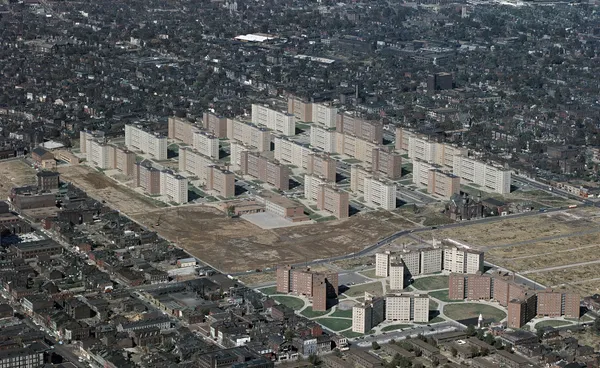
In parallel, city officials have indicated renewed interest in the former Pruitt-Igoe site, a large tract that has cycled through planning concepts for decades. The site, long viewed as symbolic of mid-century urban renewal and its aftermath, has been subject to environmental assessment and redevelopment planning efforts over time, including federal environmental work that helped clarify conditions for future non-residential reuse.
The site has also been intertwined with earlier NorthSide Regeneration agreements, and it remains a strategic location because of its size, proximity to downtown, and potential to host institutional or employment-centered development.
What happens next
- The city’s next legal steps will determine whether the targeted properties proceed to court-supervised acquisition.
- Any transfer of land through eminent domain would require compensation determinations and could extend timelines through litigation.
- Separately, the city’s planning priorities for the former Pruitt-Igoe footprint will depend on ownership control, site readiness, and the ability to attract a viable project aligned with adopted redevelopment plans.
For residents, the immediate impact will likely be procedural rather than physical: court filings, appraisals, and contested valuations may precede visible redevelopment by months or years.