St. Louis Holocaust Museum opens Japanese American incarceration art exhibition examining legacy after Executive Order 9066
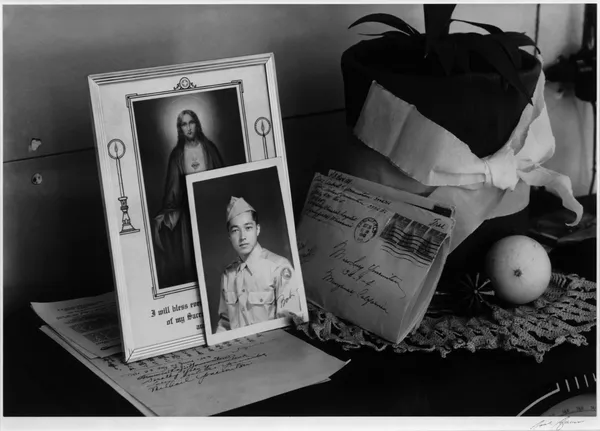
A special exhibition connects wartime incarceration to intergenerational memory through contemporary art
The St. Louis Kaplan Feldman Holocaust Museum is presenting a new special exhibition focused on the wartime incarceration of Japanese Americans, expanding the museum’s rotating programming beyond its core Holocaust galleries to examine another major civil-rights violation in U.S. history. The exhibition, titled Resilience – A Sansei Sense of Legacy, is scheduled to be on view from Jan. 17 through April 4, 2026, in the museum’s Karpati Gallery.
The exhibition frames the history through the perspective of Sansei—third-generation Japanese Americans—whose families were directly affected by the mass removal and confinement ordered during World War II. It features works by eight artists: Kristine Aono, Reiko Fujii, Wendy Maruyama, Lydia Nakashima Degarrod, Tom Nakashima, Roger Shimomura, Judy Shintani and Jerry Takigawa. The museum describes the show as spanning sculpture, photography, textiles and multimedia installations, with themes that include memory, silence, survival and identity.
Historical context: Executive Order 9066 and its aftermath
On Feb. 19, 1942, President Franklin D. Roosevelt signed Executive Order 9066, which authorized the removal of people deemed a national-security risk from designated military areas. The policy resulted in the forced removal and incarceration of Japanese Americans from the West Coast, including U.S. citizens, in government-run confinement sites.
The exhibition arrives amid long-running national efforts to document and commemorate those incarcerated. In addition to formal government actions taken decades after the war, historical preservation and remembrance initiatives have continued to expand the public record through archives, memorial projects and museum-based interpretation.
Local relevance and institutional partnership
The museum notes that the impact of wartime incarceration was felt in St. Louis as Japanese American families resettled in the region after confinement ended. The exhibition is free to visit, though tickets are required, and it is supported through a partnership with the Japanese American Citizens League, along with additional community and arts support listed by the museum.
The St. Louis Kaplan Feldman Holocaust Museum is located at 36 Millstone Campus Drive in St. Louis County and is open Wednesday through Sunday from 10 a.m. to 4:30 p.m., with the last ticket sold daily at 3:40 p.m.
What visitors will encounter
- Artwork created by third-generation Japanese Americans reflecting family experiences of incarceration and its lasting effects.
- Multiple media formats, including textiles and multimedia installations.
- A museum setting that places the exhibition within a broader educational mission centered on historical memory and human rights.
The museum describes the exhibition as an exploration of legacy, with artists using personal and cultural reference points to confront the conditions and consequences that made incarceration possible.
By situating Japanese American incarceration within a museum environment dedicated to Holocaust education, the exhibition adds another case study to the institution’s broader focus on how government policy, fear and racism can converge to produce mass violations of civil liberties.