St. Louis Green Line plan shifts from MetroLink rail to bus rapid transit study
A major transit expansion concept is being reworked
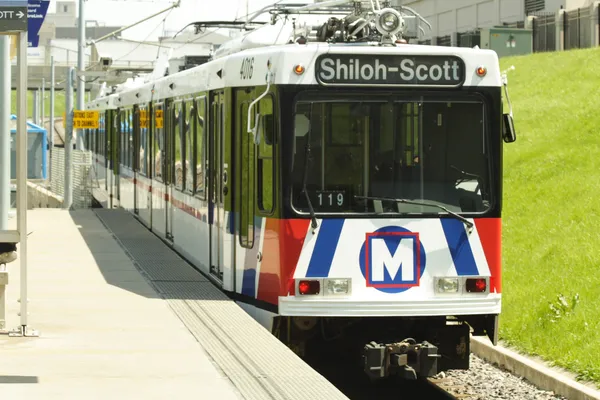
St. Louis officials and the region’s transit agency have redirected the long-planned Green Line corridor from a street-running MetroLink light-rail expansion to a bus rapid transit (BRT) alternative now under detailed evaluation. The shift follows a sequence of actions in 2025 that put the rail plan on hold, then formally ended the proposed light-rail build as it was scoped.
The Green Line had been developed as a north–south project in the city, designed to operate primarily at street level and connect Fairground Park at Grand Boulevard and Natural Bridge Avenue to the south near Chippewa Avenue. Planning materials describe a corridor length of roughly 5.6 miles with 10 stations, reflecting a downsized station plan intended to reduce property impacts and lower costs.
Cost and federal competitiveness moved to the center of the debate
The central driver behind the pivot is financial feasibility. City leadership publicly cited an estimated $1.1 billion cost for the then-current rail proposal—covering fewer than six miles and 10 stations—as exceeding available local capacity and reducing competitiveness for federal capital grants typically required to build new rail lines. The BRT approach is being pursued as a potentially lower-cost, faster-to-deliver option that can reuse portions of prior environmental and station-location work completed for the rail alternative.
The transit agency’s board authorized a contract change to evaluate “alternative conveyance options,” focusing on BRT. City communications described the approach as an effort to deliver faster and more reliable service while strengthening the project’s positioning for federal funding.
What bus rapid transit could change—and what remains undecided
BRT generally aims to provide rail-like reliability through features such as dedicated or prioritized lanes, fewer stops, and signal priority. Local discussions of the Green Line corridor now emphasize the possibility of achieving higher speed and schedule adherence on the existing street network, potentially with less disruption than rail construction.
In progress: A structured alternatives analysis and preliminary design work to determine what level of dedicated right-of-way, station infrastructure, and fleet investments are feasible.
Still unresolved: Final alignment details, stop spacing, lane configurations, and whether the project can secure the local match and federal approvals needed to advance.
A parallel funding question is emerging at City Hall
In late 2025, city lawmakers began considering whether revenue from a voter-approved sales tax—originally dedicated in city law to a north–south MetroLink expansion—can be used for BRT instead. The issue matters because local match funding typically determines how quickly a corridor project can move from study to construction.
The current Green Line work is now focused on determining whether a BRT system in the same corridor can meet performance goals while aligning with available funding pathways.
For now, the Green Line name remains attached to a corridor with years of planning behind it, but the mode and build strategy are being rewritten. The next major milestone will be the release of study findings that define a specific BRT concept, its price tag, and a realistic funding plan.