St. Louis comptroller says city-county unification could expand eligibility for high-dollar federal grant programs
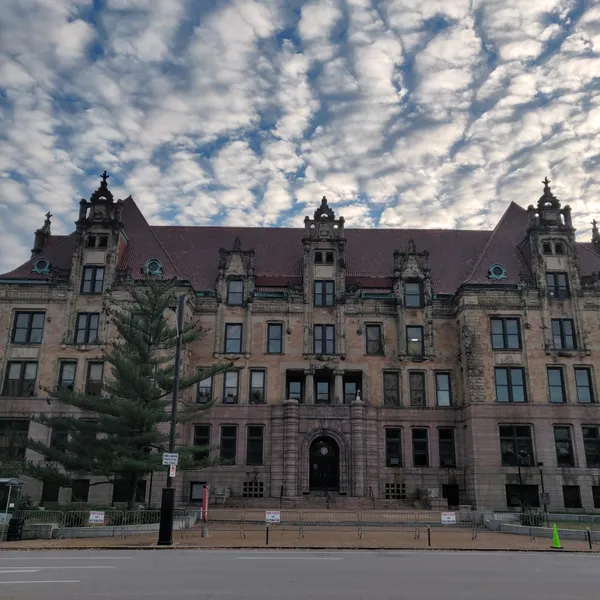
Unification debate returns with a funding-focused argument
St. Louis’ long-running debate over restructuring the city and St. Louis County is resurfacing with a renewed emphasis on federal funding eligibility. City Comptroller Donna Baringer has argued that a unified city-county framework could allow the region to compete for grant programs that are tied to population size or regional scale—opportunities she says are harder to reach under the current separation.
Baringer has framed the concept as “mutual cooperation,” describing an approach aimed at creating a single, unified county structure that includes the City of St. Louis, rather than a traditional merger of two fully separate governments.
How population thresholds can shape federal competition
Many federal grant programs are built around formulas and eligibility criteria that take into account population, jurisdictional boundaries, and the capacity of an applicant government to manage large, complex projects. In Baringer’s assessment, St. Louis’ current split—an independent city adjacent to a separate county—can complicate regional applications and may limit access to certain funding pools where size and unified governance are advantageous.
As an illustrative comparison, Baringer pointed to recent large-scale grant activity in the Kansas City region and argued that a combined St. Louis city-county could be positioned to pursue similarly large awards, particularly when grants require local or state matching funds.
What would have to happen before a plan could move forward
Any formal city-county unification proposal would first require a process step spelled out in local governing documents: establishment of a Board of Freeholders. Under the framework Baringer described, the county executive and city mayor would initiate the board, which would be responsible for developing a plan that could then proceed through required approvals.
The Board of Freeholders concept is rooted in the region’s governmental history. St. Louis became an independent city in the late 19th century, separating from St. Louis County and taking on county-type functions within its own boundaries—an arrangement that still defines governance today.
Key issues: services, municipalities, and political feasibility
Baringer acknowledged that consolidation efforts historically face skepticism, particularly among county residents concerned about taxes, service levels, and whether resources would shift among communities. She also noted that much of St. Louis County is governed through incorporated municipalities with their own local services, while the county government has direct control over unincorporated areas—adding complexity to any regionwide restructuring.
Governance structure: determining how representation, executive authority, and administrative systems would be organized.
Service delivery: aligning public safety, public works, and health functions that are currently split across jurisdictions.
Finance and grants: clarifying how consolidated eligibility, matching funds, and compliance obligations would work.
The comptroller’s argument centers on scale: a single jurisdiction, she says, could compete more effectively for federal dollars and present a clearer regional structure to outside funders.
Status: no active negotiations disclosed
While the funding argument has sharpened the public conversation, Baringer indicated she is not currently engaged in active unification negotiations with St. Louis County officials. The discussion, for now, appears to be at the stage of framing and feasibility rather than formal joint planning.
Any next step—if pursued—would require assembling a Board of Freeholders and producing a detailed, voter-facing plan that addresses governance, municipal roles, and how services and revenues would be managed across the region.