St. Louis Alderman Shane Cohn calls for renewed debate on city-county municipal consolidation in the region
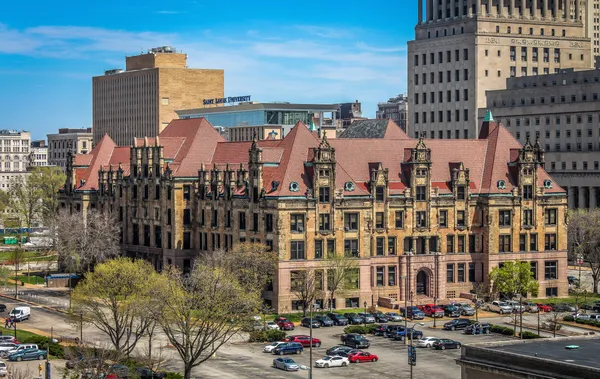
A long-running governance question returns to City Hall
A proposal to revisit municipal consolidation in the St. Louis region has re-emerged, with 3rd Ward Alderman Shane Cohn urging a renewed public conversation about whether the city and St. Louis County should pursue a unified governmental structure. The call comes as local leaders continue to weigh how fragmentation across dozens of jurisdictions affects economic development, service delivery and the region’s competitiveness.
St. Louis is an independent city, formally separated from St. Louis County in the late 19th century. That structure has shaped the region’s governance for nearly 150 years, leaving the city and county with separate administrations, budgets and elected leadership while still sharing a labor market and infrastructure network.
Why consolidation remains a recurring policy idea
Cohn’s case centers on the argument that the region’s many jurisdictions often compete for investment and amenities rather than coordinating strategy. In public remarks, he has pointed to the visibility of city politics compared with limited public awareness of leaders in major neighboring municipalities, framing that gap as evidence of a broader mismatch between how residents experience the regional economy and how government is organized.
Supporters of consolidation efforts have historically argued that unified governance could improve coordination on issues that cross borders—transportation networks, policing and public safety coordination, economic development incentives, and major capital projects—while potentially reducing duplication in administrative functions.
What happened to the last major consolidation push
The most prominent recent campaign for a city-county merger—commonly known as “Better Together”—unraveled in 2019 after intense political and public backlash. A major point of contention was the plan’s reliance on a statewide vote to authorize the merger, rather than limiting decision-making to city and county voters. Another flashpoint was the role of then-St. Louis County Executive Steve Stenger, who was initially positioned to lead a proposed “metro city” government before the effort was ultimately withdrawn.
By 2020, discussions tied to regional restructuring continued in various forms but lost momentum amid the coronavirus pandemic and shifting political priorities.
Current status: renewed legislative interest, no active merger vote
In the Missouri General Assembly, Rep. Ian Mackey filed a proposed constitutional amendment in 2025 related to consolidating St. Louis County and the City of St. Louis. The measure advanced to the point of a public hearing but did not reach a floor vote, leaving no active statewide ballot measure underway at this time.
Key questions that would shape any future consolidation plan
- Who votes: city and county residents only, or a broader statewide electorate.
- What changes: full governmental merger versus shared services or limited structural reforms.
- Representation: how political districts would be drawn and how local identities and neighborhood governance would be preserved.
- Public safety and courts: whether consolidation would alter responsibilities now spread across multiple departments and municipal systems.
Any renewed consolidation effort would likely face the same central test as past proposals: persuading residents across the city, county and municipalities that the benefits outweigh concerns about representation and local control.
Cohn’s call does not by itself start a formal process, but it reopens a policy debate that has repeatedly surfaced when regional leaders confront population shifts, competition for jobs and investment, and the high cost of maintaining parallel systems of government.