Rock Hill residents report persistent marijuana odors from cannabis manufacturing, raising enforcement and zoning compliance questions
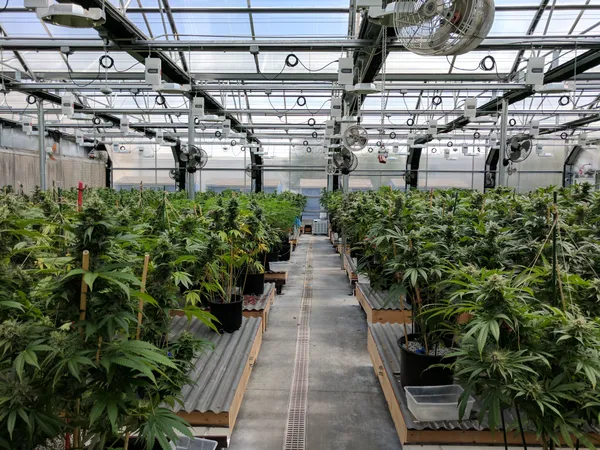
Odor complaints focus attention on Rock Hill’s cannabis-industry footprint
Residents in and around Rock Hill, Missouri, have increasingly reported smelling marijuana in outdoor areas and along major corridors, prompting renewed scrutiny of how cannabis cultivation and manufacturing operations control odor beyond their property lines. The complaints center on the practical challenge of operating highly regulated facilities in close proximity to established neighborhoods in a dense inner-ring suburb.
Cannabis plants and processed material emit volatile aromatic compounds commonly described as “skunky” or pungent. In industrial-scale cultivation and post-harvest processes such as drying, curing and trimming, these odors can escape through building exhaust systems if filtration and containment are inadequate or not maintained. Because odor can travel with wind and weather conditions, residents often describe the smell as intermittent—strong at certain times and seemingly absent at others.
What Rock Hill’s municipal code requires
Rock Hill’s zoning rules for marijuana-related businesses are explicit about odor control. The city code requires marijuana-related activities to occur only within enclosed buildings and mandates odor-control filtration and ventilation systems designed to prevent marijuana odors from leaving the premises. The standard is strict: odor is not supposed to be detectable outside the facility’s property boundary by a person with a normal sense of smell. Facilities must submit an odor mitigation plan during site plan review or the occupancy permit process.
Those requirements place the issue squarely in the realm of code compliance rather than subjective quality-of-life concerns. If odors are repeatedly detectable off-site, the question becomes whether the facility’s systems, operations or maintenance are meeting the city’s enforceable standard.
How complaints typically move through oversight channels
In Missouri, cannabis facilities operate under state licensing and oversight while also remaining subject to local land-use rules. Residents generally route concerns through local government, but the state also maintains a formal complaint process tied to licensed cannabis facilities. Local officials can track incidents, request corrective plans, and use permitting and nuisance provisions where applicable.
Local enforcement: City codes can require mitigation plans and address potential nuisance conditions.
State oversight: Separate complaint mechanisms exist for concerns involving licensed cannabis entities.
Regional context: a recurring issue near cultivation and processing sites
Odor has repeatedly emerged as one of the most visible community impacts of legal cannabis production nationwide, and the St. Louis region has seen policy responses that focus on setbacks, special permits and odor-performance standards. In Rock Hill, the rules already emphasize containment and non-detectability beyond property lines—leaving limited ambiguity about what compliance should look like in practice.
Odor disputes around regulated industries often hinge on a simple test: whether the impact is detectable beyond the facility boundary where standards require it not be.
For residents, the near-term concern is relief from recurring odor episodes. For the operator and regulators, the challenge is demonstrating that engineering controls and operational practices can meet the city’s non-detectability standard consistently, not only during inspections or favorable conditions.