Gateway Arch Park Foundation to explore Illinois expansion in 2026, potentially extending park footprint to East St. Louis
A cross-river study could reshape the region’s signature waterfront landmark
The Gateway Arch Park Foundation has announced that, beginning in 2026, it will work with the National Park Service on a formal exploration of steps that could lead to an expansion of the Gateway Arch’s park footprint across the Mississippi River into Illinois. The initiative would examine what it would take to add land on the East St. Louis riverfront to the broader Gateway Arch National Park experience, a concept that has appeared in regional planning discussions for decades.
The work outlined for 2026 includes potential land acquisition, environmental testing and remediation, and a visioning study to evaluate what an Illinois-side expansion could mean for the community and the broader St. Louis region. Any change in park boundaries or ownership would involve federal processes and multi-agency coordination, and the Foundation’s announcement frames the next phase primarily as assessment and planning rather than immediate construction.
Why the Illinois riverfront has long been part of the conversation
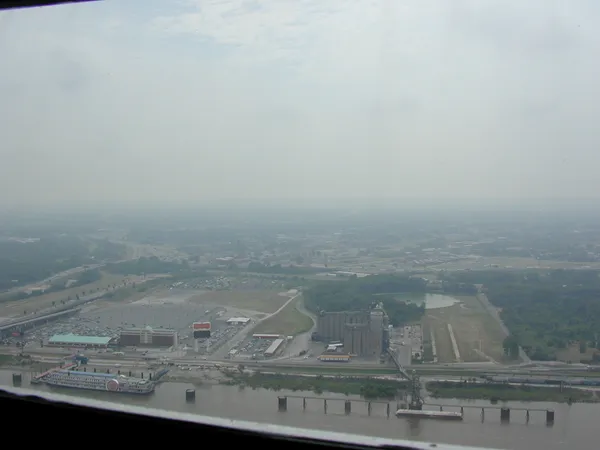
Federal law has previously authorized the National Park Service to designate up to 100 acres on the East St. Louis riverfront—between the Eads Bridge and the Poplar Street Bridge—for addition to what was then the Jefferson National Expansion Memorial. While that authority exists, large-scale federal land acquisition has faced long-running constraints, and actual expansion has not moved forward at the scale contemplated when the authorization was enacted.
One focal point on the Illinois side is Malcolm W. Martin Memorial Park, which sits directly across from the Gateway Arch and includes river overlooks and the Gateway Geyser site. The park has been promoted locally as a logical geographic counterpart to the Arch grounds, given its direct sightlines and riverfront access.
What “expansion” could involve, and what remains unresolved
In practical terms, an Illinois expansion would require answers to several threshold questions: which parcels would be included, whether land could be acquired or transferred for federal management, what environmental conditions exist on targeted sites, and what remediation—if any—would be required before public-facing development could proceed. The Foundation’s announcement places environmental testing and remediation evaluation alongside land acquisition as early work streams, underscoring that site conditions could significantly shape both timeline and cost.
- Land identification and acquisition pathways
- Environmental testing and potential cleanup planning
- A public visioning process to define uses, access, and visitor amenities
Expansion talk comes as other downtown-adjacent projects advance
The Foundation’s announcement arrives amid broader efforts to reshape the region’s central riverfront and adjacent downtown blocks. In 2025, the Foundation selected a developer for a major redevelopment proposal on the long-vacant Millennium Hotel site near the Arch grounds, a plan described as a large mixed-use project incorporating residential, office, commercial, cultural, and public spaces. Separately, regional partners have advanced work on major pedestrian and bicycle connectivity projects intended to improve access between key destinations and the Arch.
Any Illinois expansion would move through multiple stages of study and coordination before any land changes hands or new public amenities are built.
The 2026 study process is expected to clarify whether an East St. Louis expansion is feasible, what it would cost, and how it could be structured to balance regional tourism goals with local community needs and environmental realities.