Developer keeps redevelopment push alive for downtown St. Louis AT&T Tower amid incentive uncertainty
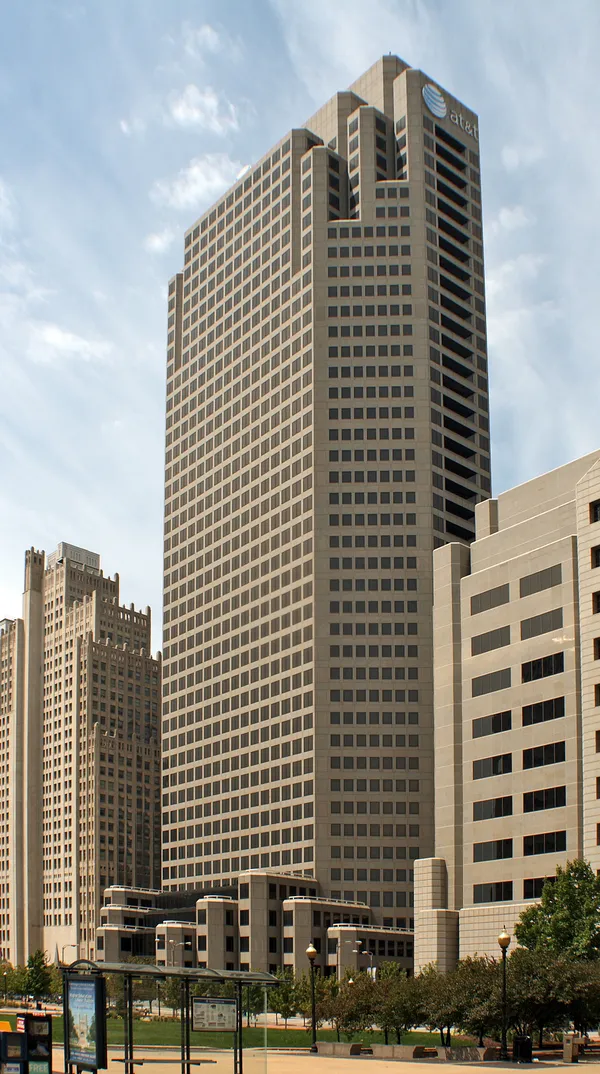
A stalled megaproject still on the table
The developer behind plans to reposition the long-vacant AT&T Tower in downtown St. Louis says the effort to turn the building into a regional draw remains active, even after a key state incentive proposal failed to advance in Jefferson City in 2025. The 44-story property at 909 Chestnut is among the city’s largest buildings by area and has stood largely unused since AT&T consolidated operations elsewhere, leaving a major gap in the downtown office market.
The current owner, the Boston-based Goldman Group, acquired the building in April 2024 for about $3.6 million. Early concept discussions have centered on converting the tower from single-tenant office use into a mixed-use destination anchored by housing, with street-level activity intended to increase daily foot traffic downtown.
What the redevelopment concept includes
Publicly described elements of the proposal have pointed toward a large residential program with amenities designed to attract both residents and visitors. Among the features previously outlined were hundreds of apartments, ground-floor retail and entertainment uses, and visitor-oriented components such as an observation deck. Additional ideas discussed in earlier planning descriptions included indoor recreational space and a movie theater.
- Residential conversion at a scale large enough to materially increase downtown’s housing supply
- Retail and amenity programming aimed at building a day-to-night destination
- Reconfiguration of parking within the structure, a recurring obstacle for prior attempts
Financing remains the central constraint
The project’s immediate challenge is not the lack of a reuse concept but the difficulty of closing a financing gap typical of large office-to-residential conversions. In 2025, Missouri lawmakers debated a new tax credit program intended to support precisely these conversions, with a proposed statewide cap of $50 million annually and additional provisions for very large buildings. The measure did not reach final passage before the legislative session ended, and the developer subsequently indicated the tower’s redevelopment timeline would be delayed without that assistance.
Large-scale conversions often depend on layered financing, including public incentives, because the cost of retrofitting deep-floorplate office towers for residential use can exceed achievable rents in many Midwestern downtowns.
Historic status could shape the path forward
The tower’s listing on the National Register of Historic Places, finalized in 2022, is a factor in the financing strategy because it can enable the pursuit of historic preservation tax credits when a project meets program requirements. City leaders have described the building as a prominent redevelopment opportunity, while also emphasizing that viable financing and execution capacity will determine whether the proposal proceeds.
For downtown St. Louis, the stakes are significant: returning a 1.4-million-square-foot vacant tower to productive use would represent one of the region’s largest adaptive-reuse efforts and a major test of how quickly legacy office space can be repositioned in a post-pandemic market.