Clayco founder Bob Clark weighs St. Louis strengths while tracking the 2026 county executive race
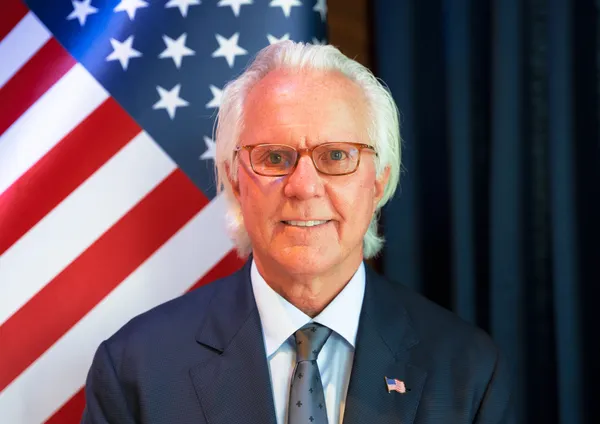
A prominent builder frames regional competitiveness as an organizing principle
Bob Clark, founder and executive chairman of Clayco, has renewed a public focus on St. Louis’ capacity to compete for jobs, investment and major projects—while signaling close attention to the 2026 St. Louis County executive contest. In a wide-ranging discussion, Clark described the region’s long-term challenge as the absence of a shared, durable strategy that spans jurisdictions, business, neighborhoods and civic leadership.
Clark’s comments come as the St. Louis area continues to debate how to accelerate redevelopment, address infrastructure needs and improve everyday conditions that shape a visitor’s first impression. He singled out visible deterioration—such as neglected roadways, dilapidated structures and litter—as issues that, in his view, cut across municipal boundaries and affect the region’s ability to attract talent and capital.
St. Louis assets: workforce, training pipelines and construction capacity
Clark credited St. Louis with providing early conditions that helped Clayco grow, pointing to the region’s educated workforce, skilled labor base and union construction trades supported by apprenticeship and training programs. He also described the corporate landscape of the region at the time he started the company roughly four decades ago as an environment that helped entrepreneurs build networks and win work.
At the same time, Clark said Clayco’s relationship with the region shifted as the company expanded. He described a deliberate move in the early 1990s to pursue more work outside St. Louis, later relocating the company’s headquarters to Chicago as Clayco grew into a national firm.
Quality-of-life concerns: safety perceptions, traffic enforcement and litter
Clark argued that public safety and quality-of-life indicators remain central to competitiveness. He pointed to reckless driving and limited traffic enforcement as factors that can affect whether residents and visitors feel safe enough for communities and commercial districts to thrive. He also highlighted widespread litter on streets and highways as a visible sign of disinvestment and weakened civic pride.
Clark framed these issues as regional responsibilities rather than neighborhood-specific problems, emphasizing that visible conditions in one corridor can shape broader perceptions of St. Louis.
Investment signals: Clayco’s Berkeley consolidation and a message to peers
In late 2023, Clayco announced plans to consolidate its St. Louis-area operations into a single facility in Berkeley, reactivating a former Express Scripts building that Clayco had constructed years earlier. Clark described the move as an intentional investment in the region and a public signal meant to convey confidence to other employers and developers.
He also emphasized that downtown remains important to regional success, even as Clayton has grown as an economic center, arguing that strong central business districts are a common feature in metros that are performing well nationally.
Political backdrop: an open 2026 county executive race and key election dates
The county executive race is unfolding on a fixed election calendar. Missouri’s primary election is scheduled for Aug. 4, 2026, followed by the general election on Nov. 3, 2026. Candidate filing for the August primary opens Feb. 24, 2026, and closes March 31, 2026.
St. Louis County Executive Sam Page has announced he will not seek re-election.
State Sen. Brian Williams has entered the Democratic contest.
County Councilmember Dennis Hancock has launched a Republican bid.
Clark has not announced candidacy, but his remarks positioned county-level leadership as a lever for coordination—an emphasis likely to keep the county executive contest closely watched by business and civic stakeholders in 2026.