After alleged $1.6 million diversion, Missouri auditor expands review of St. Louis Building Division finances
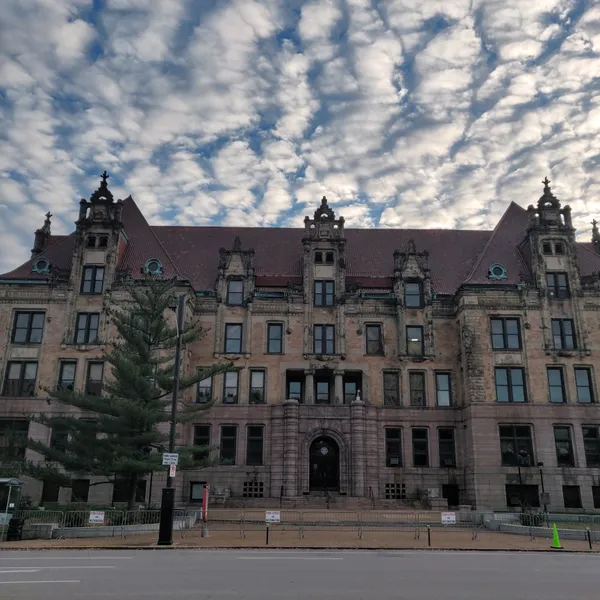
State scrutiny widens after federal indictment tied to city stabilization contracts
Missouri State Auditor Scott Fitzpatrick has moved to expand his office’s work involving the City of St. Louis Building Division, shifting from an initial review toward a broader accounting examination following allegations that more than $1.6 million in public funds were diverted through city contracting.
The expansion comes as federal prosecutors unsealed an indictment in March 2026 charging a former city building inspector, Adebanjo “Banjo” Popoola, with wire fraud. The indictment alleges he used his position within the Building Division to steer money from city-funded stabilization work to companies tied to family members and to personally benefit from the proceeds. The criminal case is pending in U.S. District Court.
How the alleged scheme intersected with city property programs
The Building Division plays a central role in St. Louis’ building safety and permitting functions, but it also connects to city efforts aimed at stabilizing vacant properties. One such initiative, the Prop NS (Proposition Neighborhood Stabilization) program, is designed to stabilize vacant residential buildings owned by the city’s Land Reutilization Authority as a first step before sale and full rehabilitation.
In parallel, St. Louis has operated stabilization efforts funded through pandemic-era federal relief dollars. The federal indictment alleges that funds meant for repairing and stabilizing deteriorated buildings were routed to companies linked to Popoola’s wife and sister through a contracting process tied to these stabilization initiatives.
What a “full accounting” can change
A full accounting review generally seeks to determine whether money received and disbursed by a government unit can be traced through records in a complete, consistent way—matching invoices, approvals, payment logs, and deposit activity to underlying contracts and program rules. In this case, the widened scope increases the likelihood that auditors will examine not only individual transactions flagged by investigators, but also the Building Division’s controls around approving work, verifying completion, and processing payments.
- Verification of vendor eligibility and conflicts-of-interest screening
- Documentation supporting contract awards and change orders
- Processes used to validate work completion before payment
- Reconciliation of program-level spending totals to financial ledgers
A longer-running issue: internal controls over receipts and reconciliation
Concerns about the Building Division’s financial controls have surfaced in earlier government reviews. Prior audit work identified basic control vulnerabilities—such as weak reconciliation practices and insufficient tracking of numbered permits—that can increase the risk of loss or misappropriation if not corrected and consistently maintained.
The state review now unfolding is likely to test whether financial safeguards were strong enough to detect irregularities early and whether exceptions were escalated for investigation.
City and state processes will proceed on separate tracks: the federal case will determine criminal liability, while the state auditor’s expanded accounting work is expected to focus on financial accountability and whether controls and oversight mechanisms functioned as intended. Any formal findings would be expected to include recommendations aimed at preventing a recurrence and improving traceability of public dollars tied to building stabilization and related programs.